

Hospitality is an incredibly stressful industry. Having grown up above a pub I can attest to that. The hours are long, the work is physical, and the profits are tiny. When whole families work, and often live, in the same business, the pressure is unrelenting. You can’t vent to your other half about the chef ranting and raving during service if they are the chef.
At my parent’s place, I saw staff turn to drugs or alcohol for relief. The effects ranged from the comical to the downright destructive. One chef would slug cooking wine when they thought no one was looking, another developed a heroin addiction that nearly cost them their life.
I’d love to write this off as anecdotal evidence, but the stats tell the same story. Hospitality workers are almost three times more likely than average to be heavy drinkers and eight in ten report witnessing drug use at work.
I suspect high rates of undiagnosed neurodiversity play a part. The instant decision-making that comes with ADHD is a strength when orders pile up and the heat is on. Yet in a different context, that same impulsivity leads to saying yes when a colleague offers you something to get through the shift, or just one beer after work turning into six. One of the reasons I quit drinking for good was one pint never being enough. No matter how hard I chased the buzz of that first drink, it always got away.
In hospitality, when the pressure rises, so too does the need to escape it. With taxes rising, costs increasing, and four businesses closing every day, this problem is only going to get worse.
As I wrote about last week, Tom Kerridge has been hitting the airwaves campaigning for a cut in VAT. He needs to succeed - it could help thousands of businesses survive this nightmare of rising costs and taxes. But in the long-run, Kerridge could do his industry a greater service by changing his tune on alcohol.
He’s talked openly about how after a difficult service he would drink two pints of negroni and six pints of lager, before washing it down with a few gin and tonics. It makes my dad’s post-work bottle of red look like ribena.
Kerridge quit drinking more than 12 years ago and was recently diagnosed with ADHD. Today, he follows a low-carb “dopamine diet” to maintain “a happy space” in his head, confessing to the Times, “I’d never order a portion of chips. I might pinch one off Beth’s plate, but I don’t order a portion of chips. I’d rather just have the steak and some salad”.
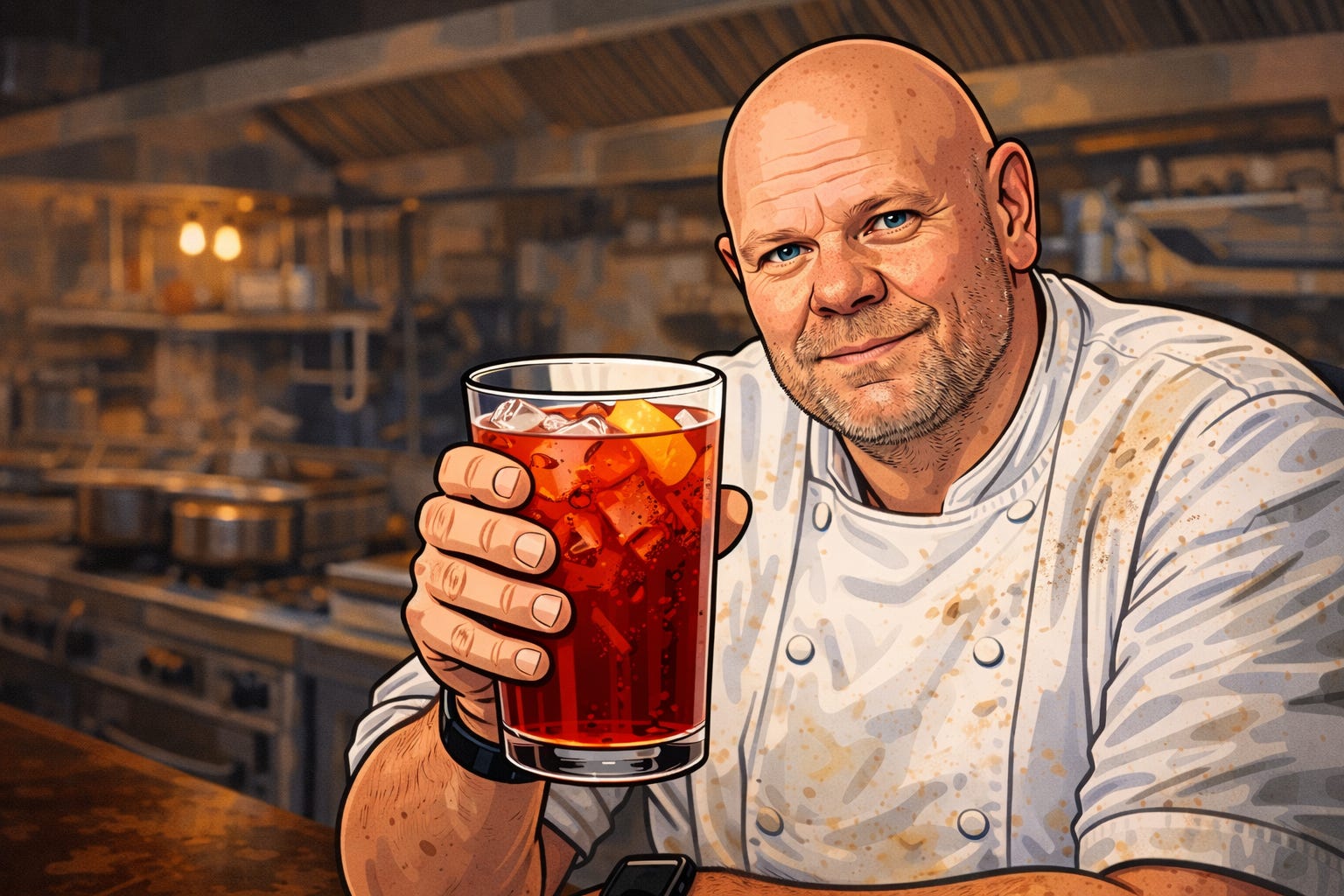
Clearly, this is a man who understands the need to control his impulses, perhaps too much. He even avoids alcohol-free beer, because it takes him back to the “zone of chaos”.
So presumably, Kerridge regrets his drinking? After all, at one point he weighed upwards of 40 stone and has admitted he feared he would have been “dead by 50” if he’d carried on.
Not a bit of it. Earlier this year, he told the Telegraph, “I don’t regret the drinking at all… If you’re driven and pushing 100 per cent, you need an escape route so you don’t crash and burn.”
We all know there are healthier ways to manage stress. Kerridge has talked eloquently about taking up exercise, spending more time with his wife and “trying to be a bit more connected to the world”. He says he’s healthier and happier living this way, which rather suggests the drinking wasn’t doing him any favours.
But this isn’t just a matter for Kerridge’s conscience; he’s a role model. Every time he defends his drinking, he gives others permission to do the same. Chefs are a stubborn bunch. Many will hear it and think: if it worked for him, it’ll work for me.
Kerridge feeds this logic. In 2024 he said, “our achievements were amazing because I was drinking, I’m convinced of that.” I’m not. Like all top chefs, his achievements are a product of talent, a mammoth work ethic, and a slice of luck along the way. Drinking isn’t a necessary condition for any of the three.
Instead, it strains relationships in businesses that feel like families. I find Kerridge’s claims that this never happened to him hard to believe. No one was ever happier when my dad was drinking more. When a live-in waiter relapsed into alcoholism, the damage went far beyond him writing off my mum’s Fiat 500.
There’s still a competitiveness to the way Kerridge talks about his drinking: “Been there, done that, done it better than everyone else.” His machismo extends from drinking harder than everyone else to quitting faster. He went cold turkey, using his head chef’s scepticism as fuel.
That mindset, turning everything into a test of will, isn’t the answer for most chefs. They don’t have Kerridge’s financial security or the luxury of stepping away from the frontline, particularly in this economic climate. For many, it just sets them up to fail.
Proper help exists, therapy and medication can be just a GP appointment away, and organisations like The Burnt Chef Project offer support that’s tailored to the industry. Not everyone can quit on their own, and they shouldn’t have to. Kerridge could say that. Instead, he makes recovery sound like a simple story of mind over matter.
A VAT cut could save thousands of hospitality businesses. Changing the way the industry talks about alcohol could save the people who make them special. Next time he’s tempted to talk about his drinking exploits, Kerridge should remember that.
I played music professionally for 20+ years, literally thousands of shows in high end restaurants. I drank alcoholically for many of those years. Drinking was more than encouraged by the establishments. The staff were always pushing booze. The patrons didn't trust people that weren't drinking, especially the musicians responsible for everyone having a good time. The first year of my sobriety, the wait staff pushed me to have "shots" of cranberry juice so I didn't "killed the vibe". I went along with it for the first couple shows and then started politely but firmly saying no. It can be a very toxic culture.
Great post! I like how clearly you connected personal experience with the bigger issue!