

“A new technology does not add or subtract something. It changes everything.” When the cultural critic Neil Postman wrote these words in 1992, the internet was a text-based curiosity, fewer than three per cent of Brits used a mobile phone, and social media was still a twinkle in Mark Zuckerberg’s eye.
Today, his words read like a prophecy: we are all prisoners to the 200g supercomputers that shape our relationships, politics, and identities.
Even amongst my tote-bag-sporting male friends, conversation goes down the road of “did you see Rachel’s Instagram post - when will she learn to stop doing landscape?”
This might appear to be the harmless gossip that’s always gone on. But our screens, not our surroundings, are increasingly becoming our shared reference points.
We pick restaurants not by their Google ratings, not the menus outside; our conversations are sparked by deranged tweets by American billionaires, not what we see with our own eyes.
Next time you’re at the pub, look at how many blokes scroll whilst sipping their pint. Even at football matches, we mindlessly message, snap and bet.
Being constantly half-ignored can feel like a kick in the teeth. But the consequences are far more profound than hurt feelings. Phones give us an easy out and take away our capacity for thought. How many meaningful conversations have you had with one eye on the latest clip from The Rest is Football?
This impacts more than just friendships, it shapes how we see the country, and Nigel Farage is the prime beneficiary. He boasts 1.4 million followers on TikTok, almost three times more than his nearest challenger Zarah Sultana.
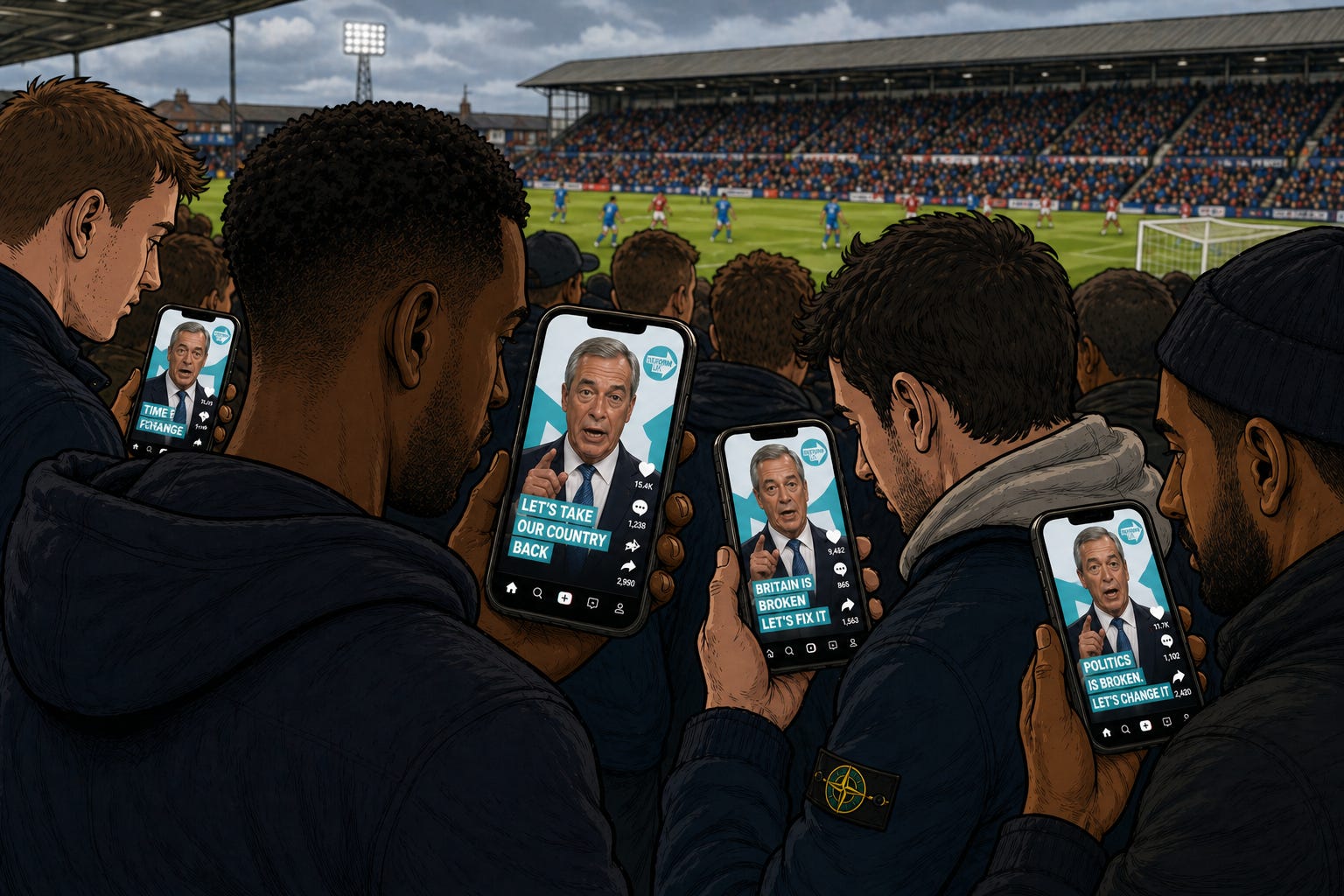
The algorithms are doing Farage’s work for him. When I meet men outside London, I’m shocked by how fearful some have become of our capital, believing the moment you step out of your front door, an asylum seeker will leap out and snatch your phone.
David Cameron’s refrain that Twitter isn’t Britain doesn’t ring true in the short-form video era. Britain sees itself through sensationalist clips and they’re broadcast to living rooms, pubs, and football grounds across the country.
A smartphone is now a requirement for modern life - I even need mine to get into my flat - and digital ID would make owning one all but mandatory. So it’s too late to turn back the clock.
It’s worth saying, we shouldn’t want to. Smartphones help us maintain friendships and meet people who share our interests. I‘ve learned about how to live well with an autoimmune disease from niche influencers in a way that would have been unheard of 15 years ago.
But a phone should be a tool for living, not a substitute for it. When conversation dries up, resist the itch of the hand - the scores can wait. When a video fuels the culture wars, ask whether it really represents the Britain you know.
Do I have any faith this will happen? Nope. Most blokes probably read a paragraph and buggered off to TikTok.
Very true. I often have a sense that the person I’m talking to ‘isn’t really there’ these days. It’s probably because half their mind remains in the digital space (and I’m as guilty as the rest)
“But a phone should be a tool for living, not a substitute for it.” Such an interesting read and so pertinent to the times that we live in. I don’t this that this I just the ailment for the males of the species. However, I do understand that, in general, females have the desire to be more socially and pack oriented! I chose this quote because this is true for phones , for AI , for a knife ! It’s not what the implements can do but how they are put to use ! The example of social media being the source of information is extremely alarming. Now, more than ever, discernment will be so vitally important as we navigate the era of fake news propaganda . A really great post . Thanks for sharing.